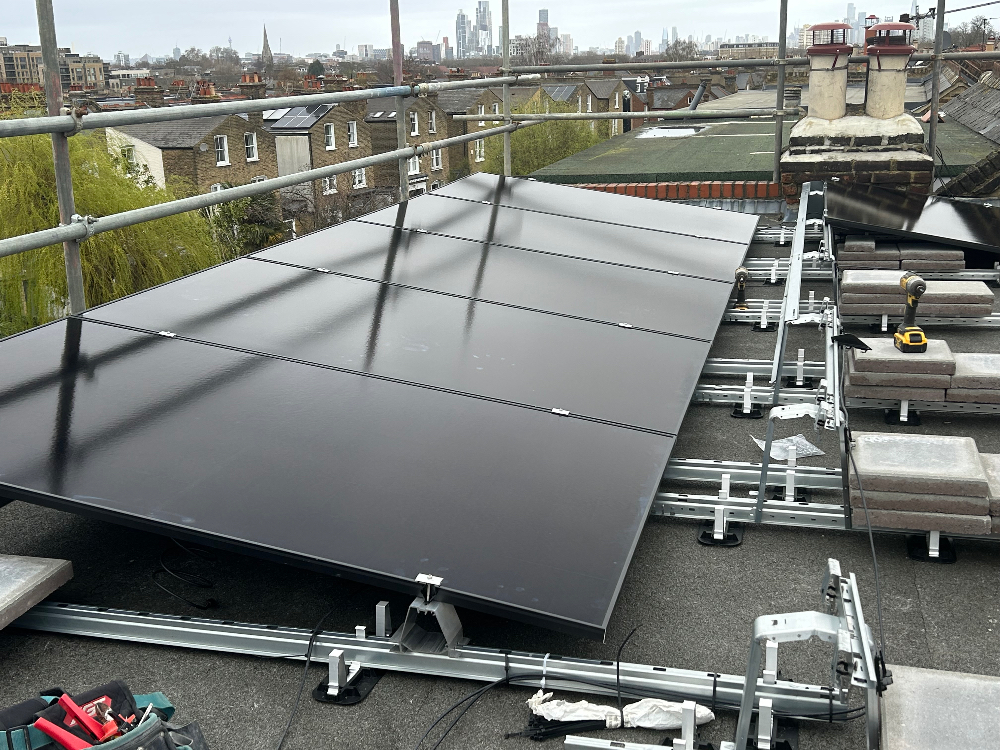
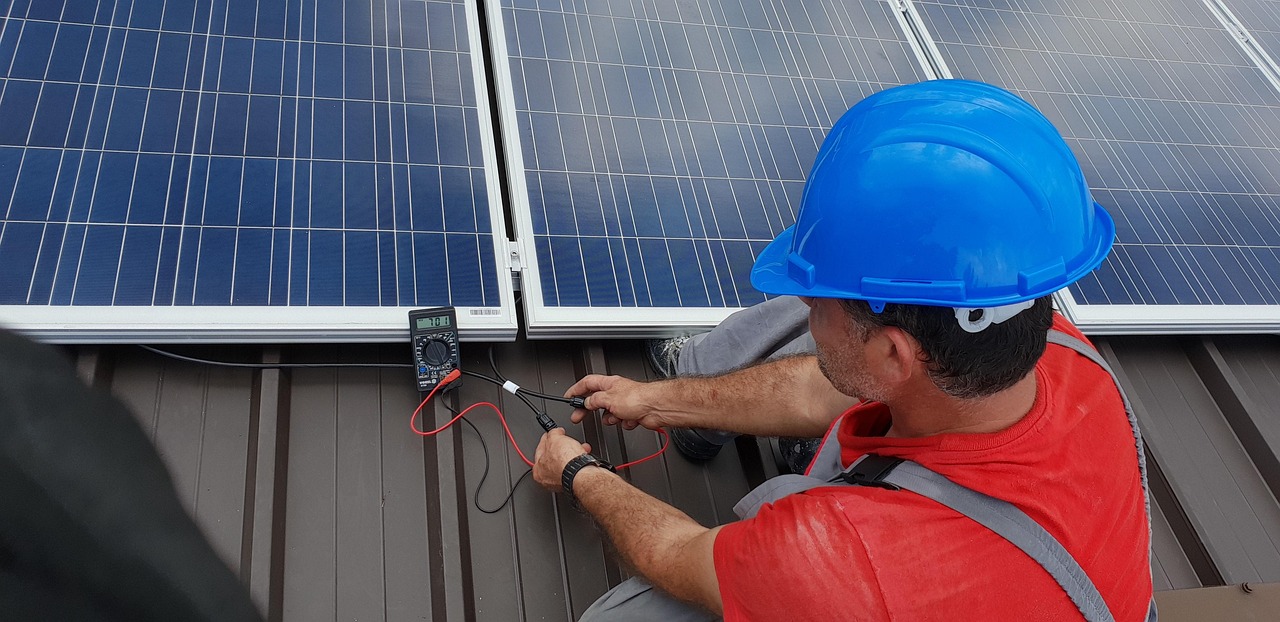
Using a Warm Homes loan for solar panels and batteries
Our solar panel and battery installations qualify for a Warm Homes loan. See who can apply, what's covered and how to apply.
Last checked against GOV.UK: 5 November 2026
At a glance
A Warm Homes loan is a loan from a participating lender, with government support to lower the cost of borrowing. You can use one to pay for solar panels, a battery or both. It's a loan, not a grant, so you repay it.
MakeMyHouseGreen solar panel and battery installations qualify. To use a Warm Homes loan for one, you need a lender that accepts a quote from an installer you choose. Some lenders only lend through their own partner installers, so check with the lender before you apply. MakeMyHouseGreen isn't a lender and doesn't arrange Warm Homes loans.
On this page: What is the Warm Homes Loan Scheme? · Who can apply? · What can it pay for? · How much can you borrow? · Will it cover a typical installation? · Does our installation qualify? · Which lender can you use? · How to apply · Interest rates · Choosing how to pay · Other funding · Checks after installation · Help and complaints · FAQs
What is the Warm Homes Loan Scheme?
The Warm Homes Loan Scheme is run by the Department for Energy Security and Net Zero (DESNZ) and is part of the government's Warm Homes Plan. It's available across England, Scotland, Wales and Northern Ireland.
The government doesn't lend the money itself. Participating lenders offer their own loans for eligible improvements, and the government gives each lender a grant towards each eligible loan. The lender must use this grant to lower the interest rate it charges you. The government support only applies to loans of three years or more.
The loan product will say if it's funded by the government through the Warm Homes Loan Scheme.
Is it a grant? No. You repay a Warm Homes loan to the lender. The government's grant is paid to the lender, not to you. If you're on a low income, you might be able to get free energy-saving improvements through a grant instead. In England, this includes the Warm Homes: Local Grant, which is run by local councils.
Who can apply?
To be eligible for a Warm Homes loan:
- you must own the property you're applying for, with or without a mortgage
- the property must be in the UK
- the property must be residential, not commercial
Eligible:
- homeowners who live in the property
- private landlords borrowing in their own name, with a loan for each property
Not eligible:
- tenants, because you must own the property
- social housing
- businesses or companies, including landlords borrowing through a company
The government doesn't set an income limit, and it doesn't require you to make other energy efficiency improvements first. Running a business from your home doesn't make your property ineligible, as long as the installation is mainly for your household's energy use.
Lenders may add their own eligibility rules, such as asking to see an Energy Performance Certificate (EPC).
What can a Warm Homes loan pay for?
For a MakeMyHouseGreen installation, a Warm Homes loan can pay for:
- Solar panels: new rooftop solar panels, including adding panels to an existing system.
- Battery storage: a home battery on its own or with solar panels.
- An EV charger: only when it's fitted as part of a solar panel or battery installation. You can't use the loan for a charger you've already had a grant for.
- The installation costs that go with them: for solar panels, this can include scaffolding, temporary safety equipment and the grid connection. For a battery, it can include connecting it to existing solar panels, setting up monitoring apps or controls and fitting isolators, breakers or other protection devices.
A Warm Homes loan won't pay for:
- a replacement roof or other structural work needed before solar panels can be fitted
- insulation, windows or doors
- an EV charger on its own
- installations at business premises
The scheme also covers heat pumps, biomass boilers in rural homes, heat network connections, domestic wind turbines and micro hydroelectric systems. MakeMyHouseGreen doesn't install these.
How much can you borrow?
| Improvement | Maximum loan |
|---|---|
| Solar panels | £15,000 |
| Battery storage | £15,000 |
| Air-to-water heat pump | £20,000 |
| Ground source heat pump | £35,000 |
| Biomass boiler | £20,000 |
| Heat network connection | £7,500 |
| Other micro-renewable systems | £20,000 |
If you're getting more than one improvement, such as solar panels and a battery, each has its own maximum. Installation costs, and any EV charger fitted with your solar panels or battery, must fit within the maximum for the improvement they're part of. The heat pump and biomass boiler limits apply before any Boiler Upgrade Scheme grant is taken off. The government can change these limits, and lenders set their own loan amounts within them.
Will a loan cover a typical installation?
Most of our solar panel and battery installations cost less than £15,000 in total, so they're likely to fit within the scheme's maximums. Solar panels and a battery each have their own £15,000 maximum. Your price depends on your home and the system you choose, and your quote will show it. The lender decides how much it will lend you.
Does a MakeMyHouseGreen installation qualify?
Yes. The scheme sets rules for the installer, the products and the quote. Our installations meet all of them:
- We're MCS certified for solar PV and battery storage. Our certificate number is NAP-61110. You can check our MCS certification yourself.
- We fit MCS certified products. The scheme requires MCS certified products to be installed by an MCS certified installer.
- Our quotes include everything lenders ask for. That's the date, your name, our headed paper, our MCS number, the full installation address, an itemised cost breakdown and the system size in kW.
- We're an OZEV-approved installer. The scheme only covers an EV charger fitted as part of a solar or battery installation by an OZEV-approved installer, and the charger itself must be an OZEV-approved model.
- We register every installation with MCS. You receive the MCS certificate, which lenders use to confirm the work meets the scheme's requirements.
We fit the myenergi Zappi as part of a solar and battery installation, and Tesla and Sigenergy chargers alongside their own batteries. All three are on OZEV's eligible chargepoint list, so they can be included in a Warm Homes loan for that installation.
Which lender can you use?
Two things depend on the lender, not on us:
- Whether it accepts a quote from an installer you choose. Some lenders only lend through their own partner installers. Others let you choose any MCS certified installer.
- Whether you pass its checks. Every lender runs its own credit, affordability and eligibility checks, and some add their own eligibility rules.
The government lists the participating lenders on GOV.UK: Lenders offering Warm Homes loans. More lenders are expected to join.
Before you apply, check on the lender's website, or ask the lender, that it accepts a quote from an installer you choose and that it's taking new applications.
How to apply, step by step

- Check you're eligible. You must own the home, it must be residential and it must be in the UK.
- Get your quote from us. To get a quote, book a free consultation. Your quote will include everything a lender asks for. If solar or a battery isn't right for your home, we'll tell you, however you plan to pay.
- Find a lender that accepts a quote from an installer you choose. Check the lender's website, or ask the lender, before you apply.
- Apply to the lender with your quote. Your quote must be less than six months old when you apply. The lender will run its credit, affordability and eligibility checks. You'll be asked to confirm the work isn't being paid for by another public grant or loan. Your loan documents will also ask you to agree that the government, or someone acting for it, can ask for access to your property at a reasonable time to check the scheme's rules have been followed.
- Check when the lender pays out. Each lender decides this. It might pay the full amount upfront, pay a deposit, pay the installer directly or pay once the installation has been checked. Tell us how your lender pays before we book your installation.
- We install your system and register it with MCS. You receive your MCS certificate. Send it to your lender if it asks for it, and keep it with your quote, finance agreement, invoice and proof of purchase.
Interest rates and repayment terms
Each lender sets its own interest rate, fees and repayment terms. Check these with the lender before you apply.
A Warm Homes loan is still a loan that you have to repay. Only borrow what you can afford to repay, and compare the total amount you'll repay, how long you'll be repaying it and any fees.
Choosing how to pay
We're not tied to any lender. You can use any lender that accepts a quote from an installer you choose, borrow another way or pay without borrowing. We'd rather you compared your options and found the best deal for you, whoever it's with. Some installers only offer finance through their own lending partners, or lend to you themselves.
Some lenders and installers advertise 0% finance. Under the scheme, the government's grant to the lender pays for part of a lower rate, and an installer or retailer can also offer its own discount on top. If an installer offers a lower rate, that cost may be built into the price of the system. Compare the full price of the system, not just the interest rate, and ask what the price would be if you paid without finance.
A Warm Homes loan may not be the cheapest way for you to borrow. Some banks and building societies offer green loans, or let existing mortgage customers borrow more for green home improvements, sometimes at a low rate for a fixed period. Borrowing more on your mortgage is secured on your home, so you could lose your home if you don't keep up repayments. Compare the total amount you'd repay before you choose.
Using a Warm Homes loan with other funding
- Other government funding: you can't use a Warm Homes loan and other government funding to pay for the same improvement. The exceptions are the Boiler Upgrade Scheme and Home Energy Scotland grants.
- VAT: installing solar panels and batteries in homes is zero-rated for VAT until 31 March 2027. From 1 April 2027 the rate is due to go back to 5%.
Checks after installation
After your installation, you may be chosen at random for an audit. This could be a check by an auditor working for DESNZ or a quality check by MCS. Being chosen doesn't mean anything is wrong with your application or installation.
If a DESNZ auditor needs to visit, you'll get at least 48 hours' notice, and the auditor can show identification confirming they're acting for the DESNZ Warm Homes Loan Scheme. You might be asked for documents, such as proof of identity or address. If MCS chooses you, it will ask about your installation and may arrange a visit.
Help, complaints and scams
- About your loan: contact your lender. If you can't resolve a complaint with the lender, you might be able to complain to the Financial Ombudsman Service.
- About your installation: contact us first. If we can't resolve it, you can complain to MCS.
- About the scheme: if your lender or installer can't answer your question, email the DESNZ Warm Homes Loan Scheme team at WHLS@energysecurity.gov.uk.
- Suspected fraud or scams: report it to Warm Homes Counter Fraud at WHLScounterfraud@energysecurity.gov.uk.
Frequently asked questions
Can I use a Warm Homes loan for a MakeMyHouseGreen installation?
Your installation qualifies. Whether you can use a loan for it depends on the lender: you need one that accepts a quote from an installer you choose. Some lenders only lend through their own partner installers, so check with the lender before you apply.
Does MakeMyHouseGreen offer Warm Homes loans?
No. MakeMyHouseGreen isn't a lender and doesn't arrange Warm Homes loans. You apply to the lender yourself.
Will my MakeMyHouseGreen quote have what the lender needs?
Yes. It's dated, addressed to you and on our headed paper, and it shows our MCS number, the full installation address, an itemised cost breakdown and the system size in kW. It must be less than six months old when you apply.
How much can I borrow for solar panels and a battery?
Up to £15,000 for solar panels and up to £15,000 for a battery. Lenders set their own amounts within these limits.
Can I add a battery to my existing solar panels?
Yes. A home battery qualifies on its own or with solar panels. Adding more panels to an existing solar system also qualifies.
Can my EV charger be included?
Only if it's fitted as part of your solar panel or battery installation by an OZEV-approved installer, and the charger is an OZEV-approved model. An EV charger on its own isn't covered.
What interest rate will I pay?
Each lender sets its own interest rate and repayment terms. Check them with the lender before you apply, along with the total amount you'll repay.
Is the Warm Homes Loan Scheme a grant?
No. It's a loan that you repay. The government pays a grant to the lender to lower the interest rate, but no money is paid to you.
Is there an income limit?
No. The government doesn't set an income limit, but you'll need to pass the lender's credit and affordability checks.
Can landlords use it?
Yes, private landlords can apply in their own name, with a loan for each property. Some lenders add their own rules about who they lend to, so check with the lender.
Can I use it for solar panels on my business premises?
No. The property must be residential, and lending to businesses or companies isn't allowed.
Does the scheme cover Scotland, Wales and Northern Ireland?
Yes. It's available across England, Scotland, Wales and Northern Ireland.
Related guides
- Solar panel batteries: do you need them?
- Adding additional solar panels
- The cost of solar panels in the UK
- How to choose a solar panel installer
- Our accreditations
About MakeMyHouseGreen
We design and install solar panels and battery storage. We're MCS certified for solar PV and battery storage (NAP-61110).
Sources
- GOV.UK, Warm Homes Loan Scheme: Overview, Eligibility, How to apply, Lenders, Audits and Help and support
- Department for Energy Security and Net Zero, Warm Homes Loan Scheme: Factsheet (27 October 2026)
- Department for Energy Security and Net Zero, Warm Homes Loan Scheme: Scheme Rules (September 2026)
- GOV.UK, Apply for the Warm Homes: Local Grant
- HMRC, VAT on energy-saving materials and heating equipment (VAT Notice 708/6)
- Office for Zero Emission Vehicles, Eligible EV chargepoint model list (updated 23 October 2026)
- MCS, Switchd Ltd t/a MakeMyHouseGreen
Last checked: 5 November 2026
Ready to see what you can save?
Our solar calculator is 100% free to use. Enter your postcode below to get started.